Markets are currently fixated on Operation Epic Fury, whose trajectory and spillover effects are highly uncertain. Even before the U.S.-Israel strike on Iran, the news flow had already skewed negative, dominated by concerns over AI disruption and mounting stress in private credit. Despite this backdrop, equity markets proved quite resilient. Rather than selling off, the market expressed its caution through a rotation from large caps to small and mid caps.
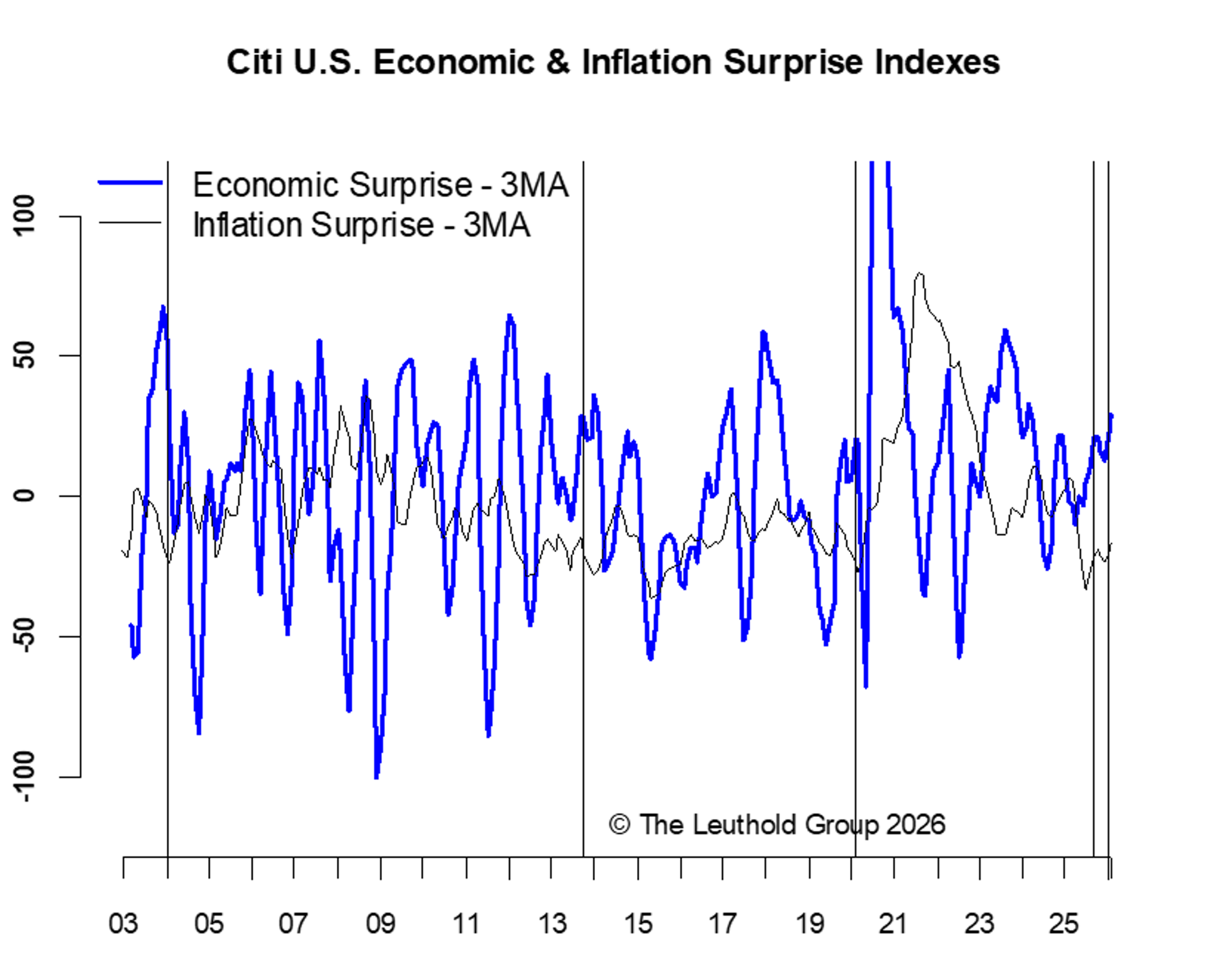
One underappreciated aspect supporting the hard-wearing equity market is the macro data. In the months leading up to the war with Iran, the Citi U.S. Economic Surprise Index (ESI) consistently hovered above +20, while the Inflation Surprise Index (ISI) sat near –20. In other words, growth data has been coming in stronger than expected, while inflation has been cooler than projected. This “Goldilocks” configuration has helped cushion risk assets and explain why equities bent under headline risk, but did not break.
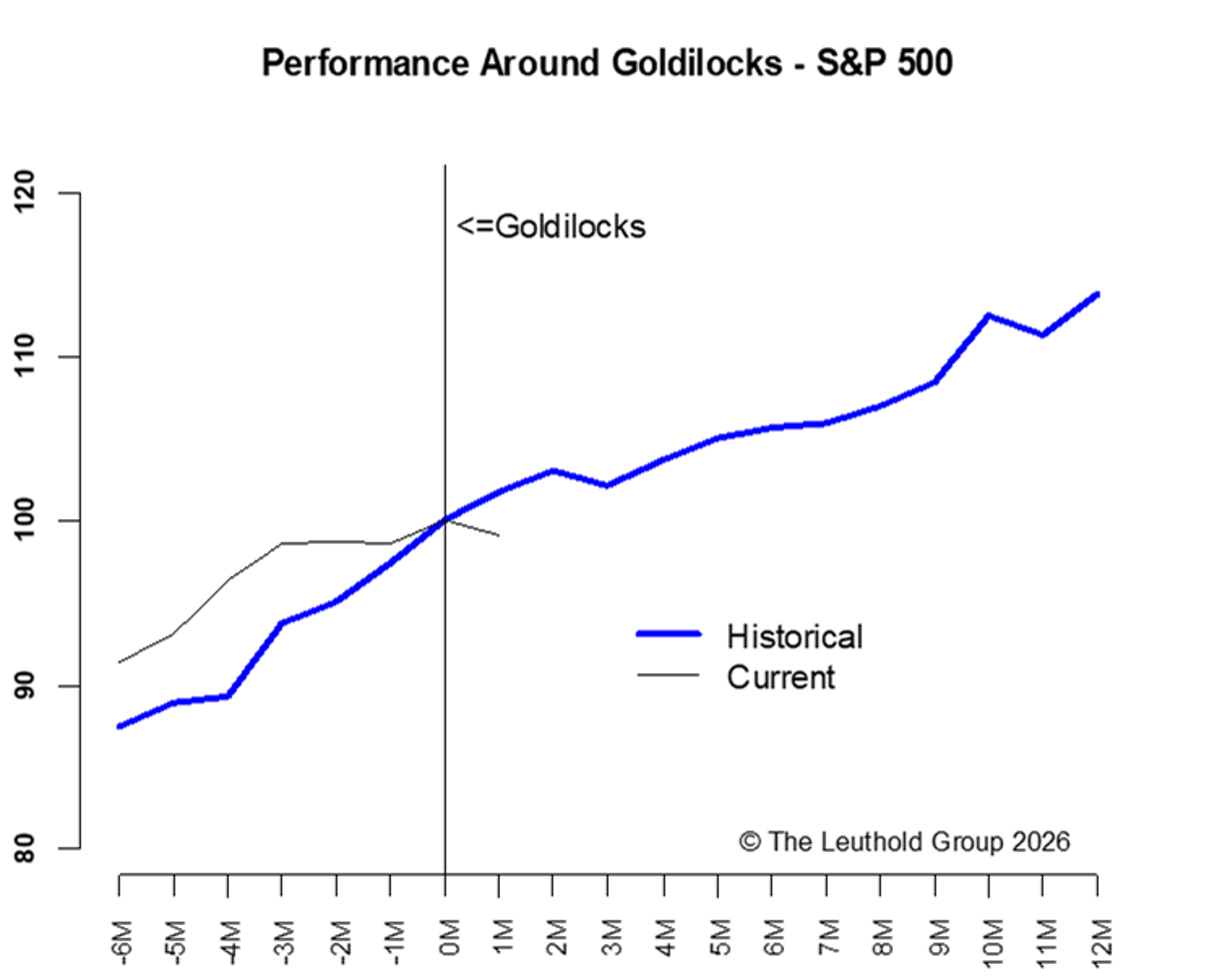
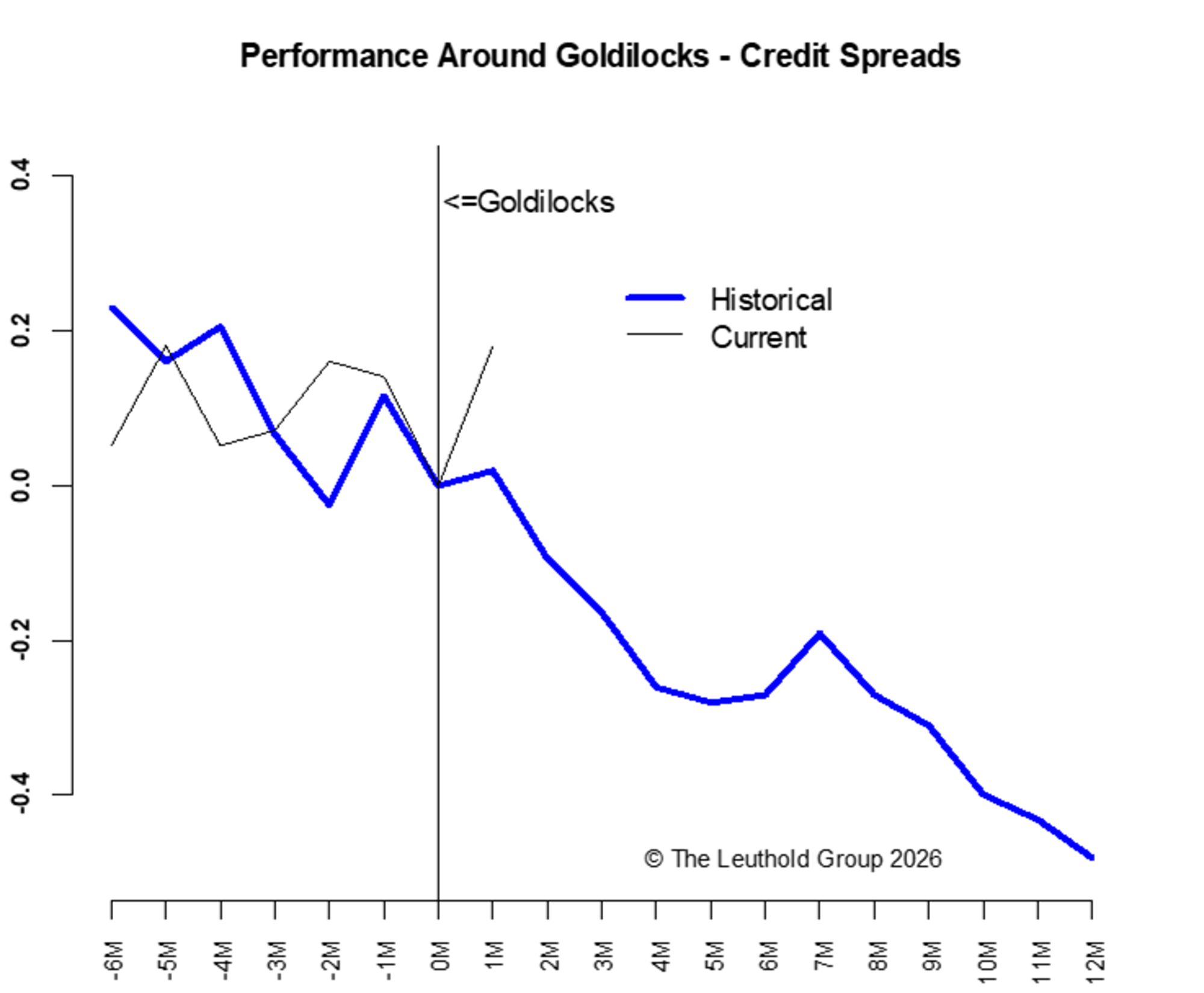
Using three-month averages, we identified five prior Goldilocks episodes where the ESI was above +20 and the ISI was below –20, with the latest occurrence on 1/31/2026 (Chart 1). Apparently, this setup is quite rare and, as the name implies, the subsequent twelve months are typically very productive for risky assets, with both equities and credit delivering strong performance (Charts 2 & 3). While recent S&P 500 performance has tracked the historical pattern closely, credit spreads have begun to price in potential fallouts from additional private credit stress, something we are monitoring diligently.
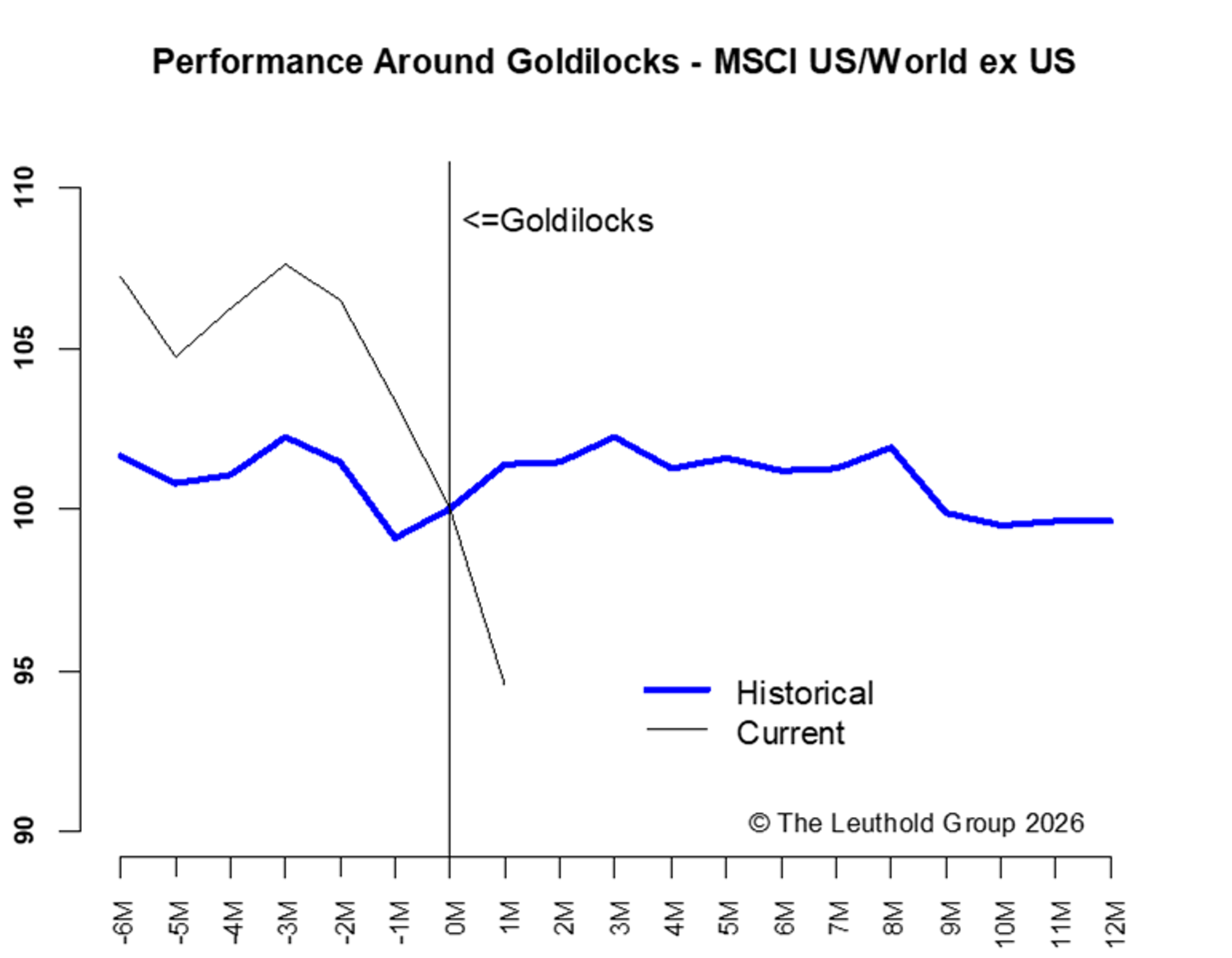
While Goldilocks conditions tend to lift broad market indexes, they offer less foresight about relative style performance. Recent foreign stock outperformance, for example, has been unusually strong relative to prior episodes (Chart 4). A potent mix of more attractive starting valuations, greater cyclical leverage, and supportive currency dynamics drove the move. Looking ahead, though, history offers no strong bias toward continued foreign leadership on a next twelve-month basis.
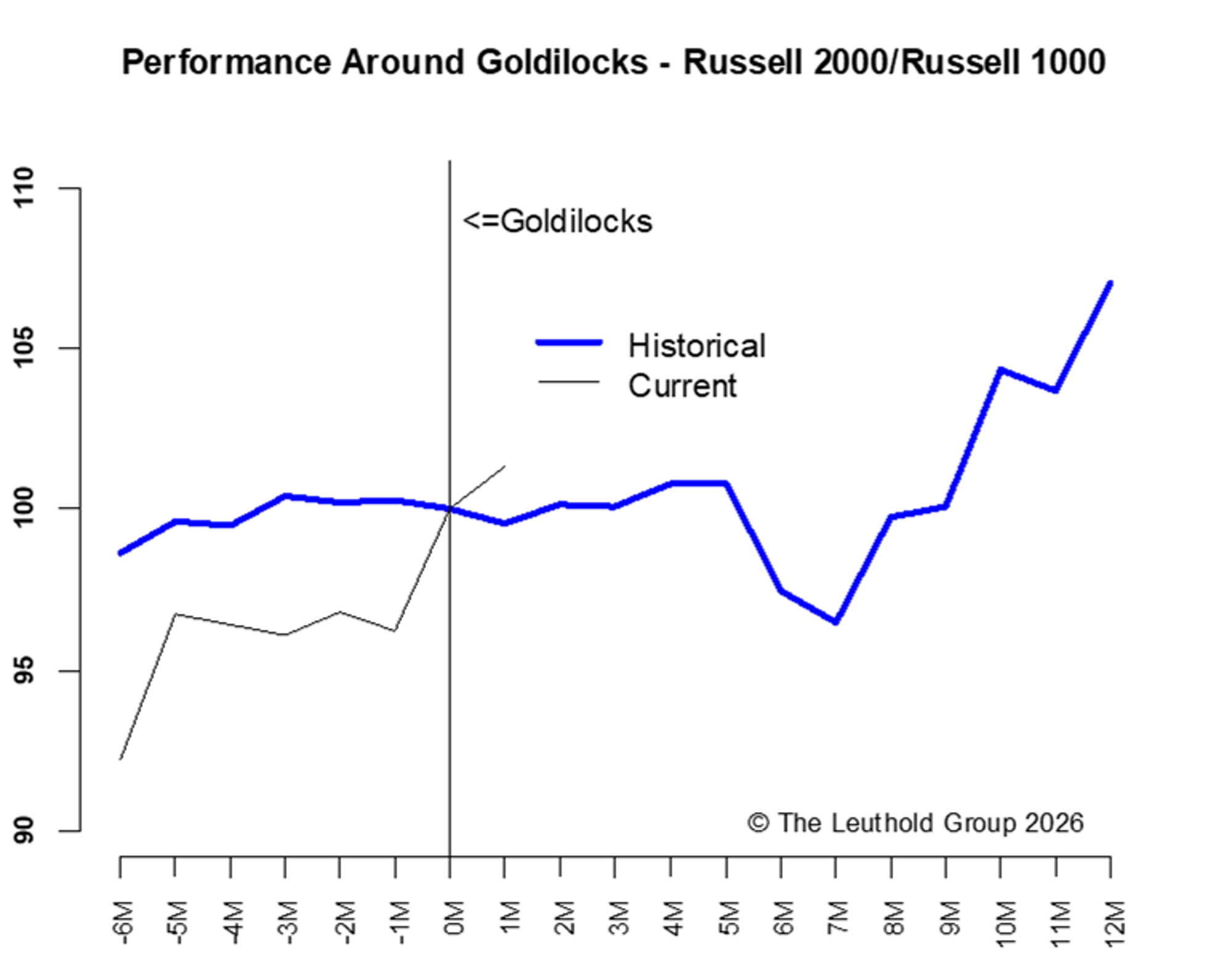
Similarly, the recent small-cap rally has far exceeded what prior Goldilocks cases would suggest, and the path forward is not definitive either (Chart 5). While small cap outperformance seems intuitive in a Goldilocks context and the rotation narrative still has a lot of appeal, further deterioration in credit conditions would quickly challenge the thesis. After all, small companies usually have higher leverage and more volatile cash flows, making them far more exposed to a credit downturn.
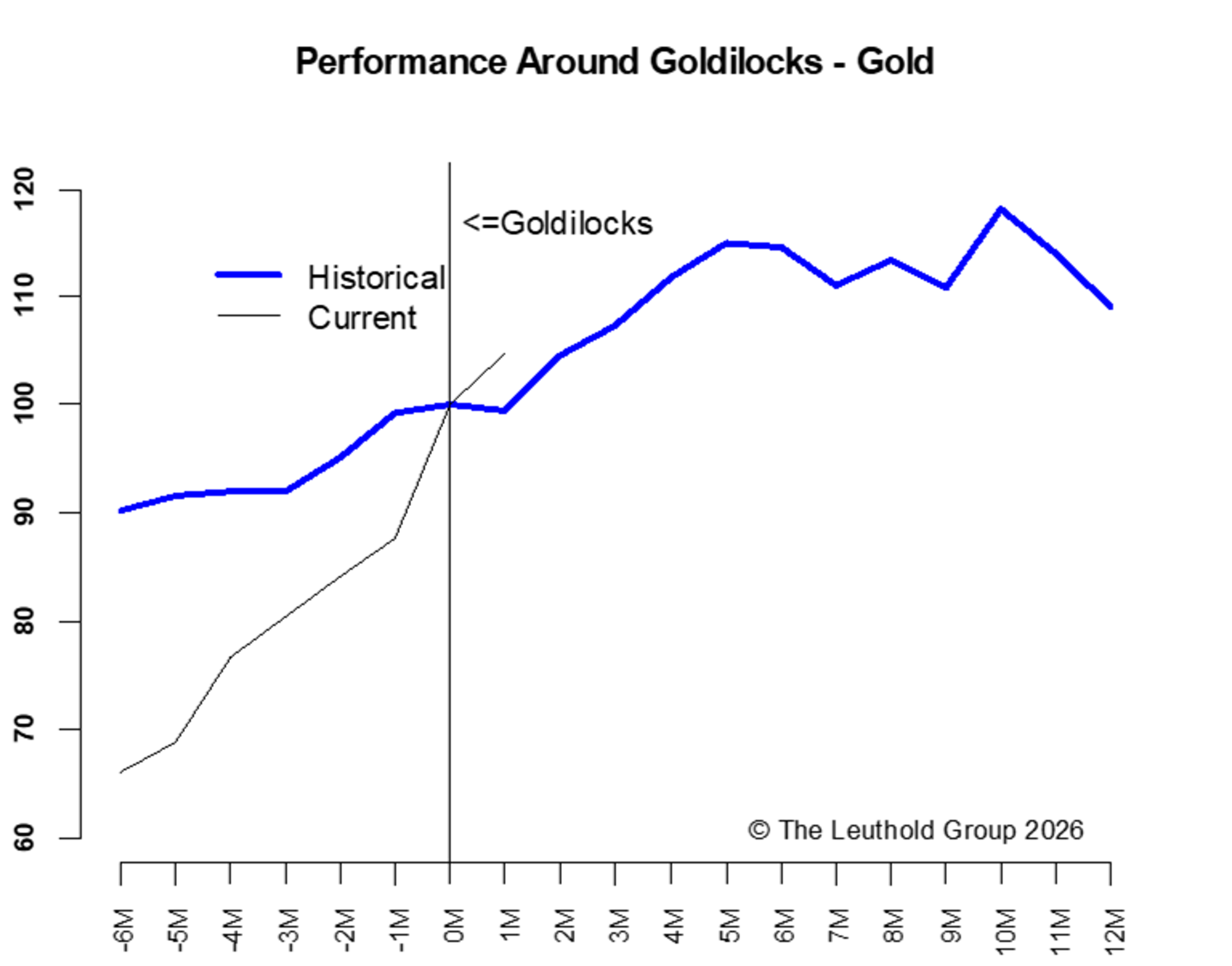
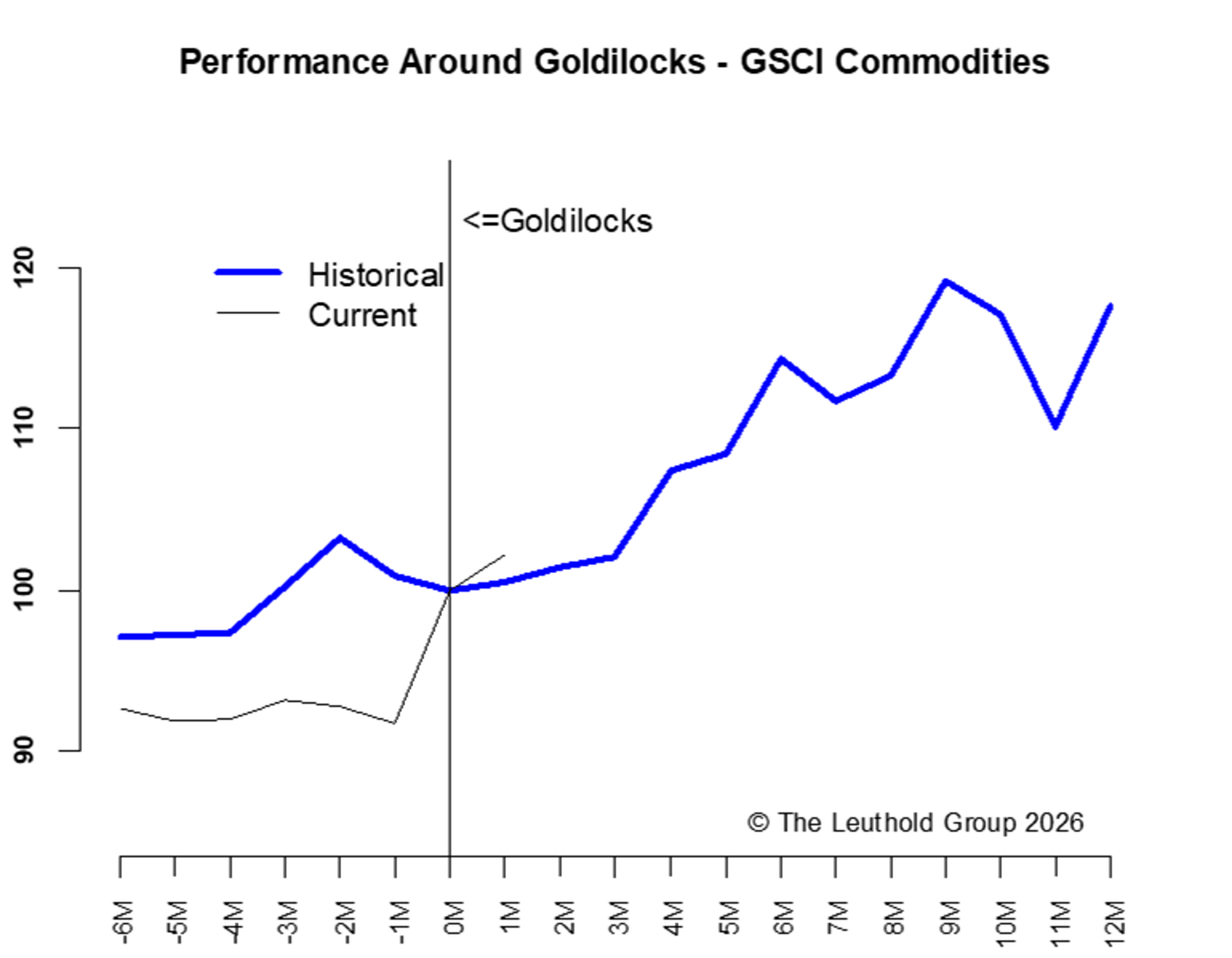
In today’s high-risk, war-prone environment, hard assets like gold and a broad basket of commodities offer a rare combination of insurance and optionality. As we have mentioned in previous reports, gold functions as a trust asset and is apt to perform well when confidence in institutions, currencies, or geopolitical stability erodes. Broad commodities, by contrast, provide exposure to the physical inputs of the real economy (energy, metals, and agricultural goods) that are directly affected by conflict, supply disruptions, sanctions, and defense-driven demand. Wars don’t just raise uncertainty; they reprice scarcity, and commodities are where that repricing shows up most quickly. In a world where geopolitical risk is likely no longer episodic but structural, these assets act less like tactical trades and more like strategic ballast. Interestingly, these vehicles have also performed quite well in Goldilocks environments (Charts 6 & 7).
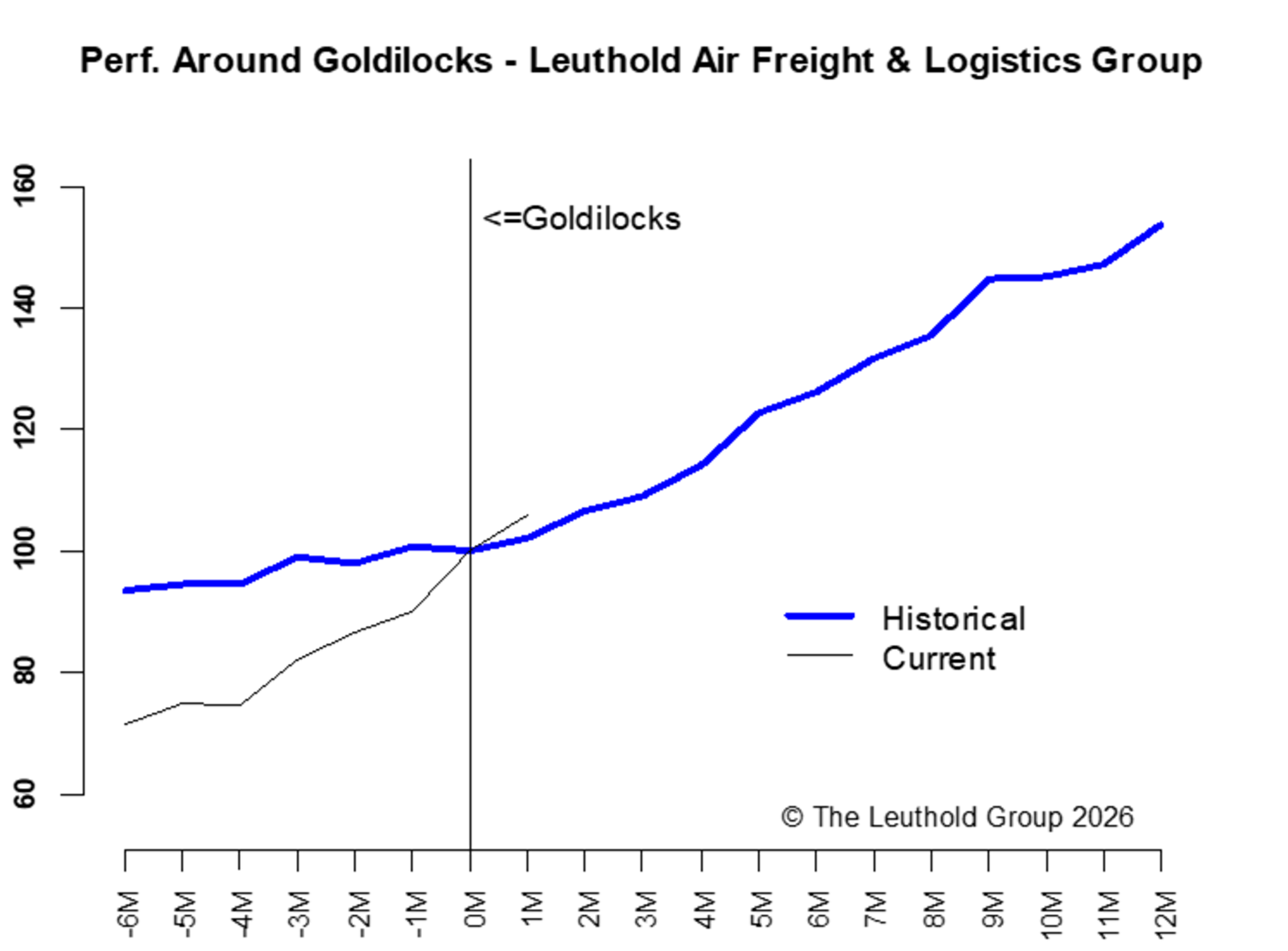
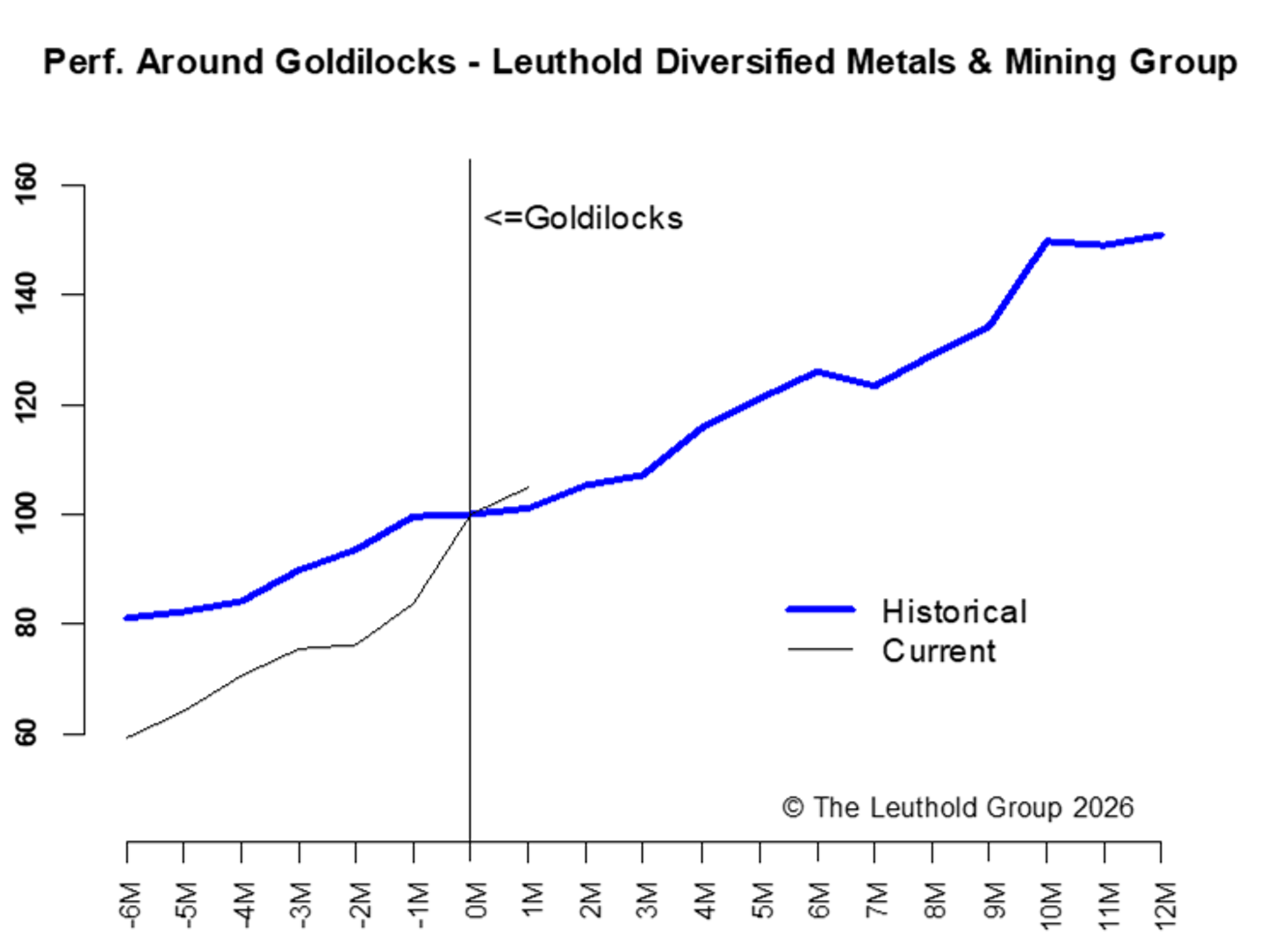

Intuitively, cyclical industries are expected to outperform in Goldilocks environments, while defensive groups tend to lag. Air Freight & Logistics and Diversified Metals & Mining are great examples of cyclical outperformance (Charts 8 & 9); both are positions in the Leuthold Select Industries ETF. Table 1 lists the best 10 and worst five industries in Goldilocks environments, and many of the top groups are also rated Attractive by our industry group model. The cyclicals versus defensives tilt is very clear here.
While the economic backdrop still feels “just right,” the market is increasingly showing signs of fracture. Beneath the surface, pockets of excess and fragility have begun to matter more than the aggregate data. In that sense, the transition away from Goldilocks is not about an imminent recession or inflation shock, but about the growing realization that some chairs are wobblier, some porridge less warm, and some beds far less comfortable than advertised.
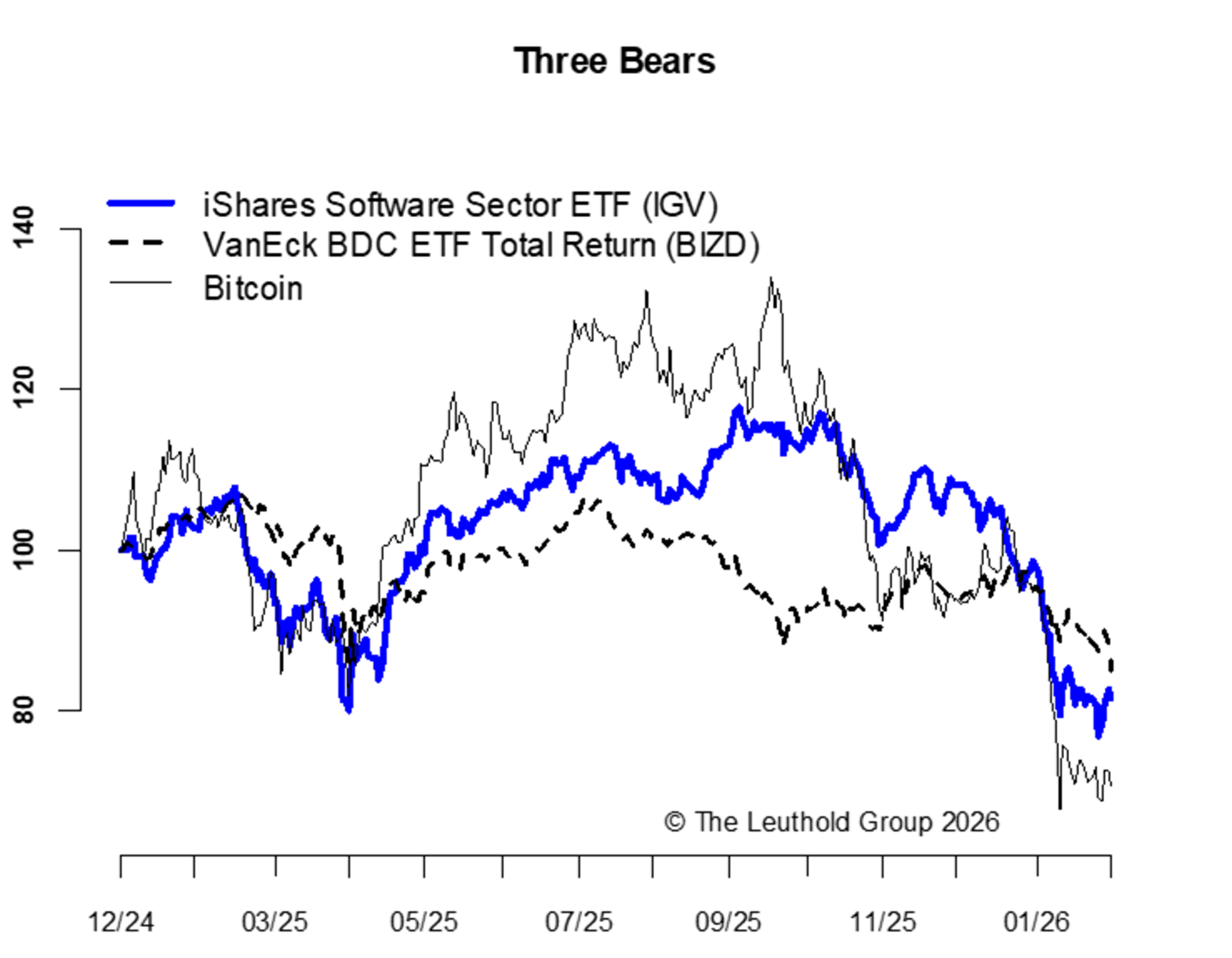
Enter the three bears: Software stocks, Private Credit/BDCs, and Bitcoin (Chart 10). While the S&P 500 remains near its all-time high, these three assets have now officially entered bear market territory. Private credit/BDCs, in particular, have declined over 20% on a total return basis. We have highlighted the interconnected risk of AI, private credit, and bitcoin in a previous report. The emergence of these three bears has only reinforced that thesis.
The common tie here is that all three assets thrive on abundant liquidity, buoyant confidence, and positive narrative momentum. Those same forces become vulnerabilities when conditions reverse.
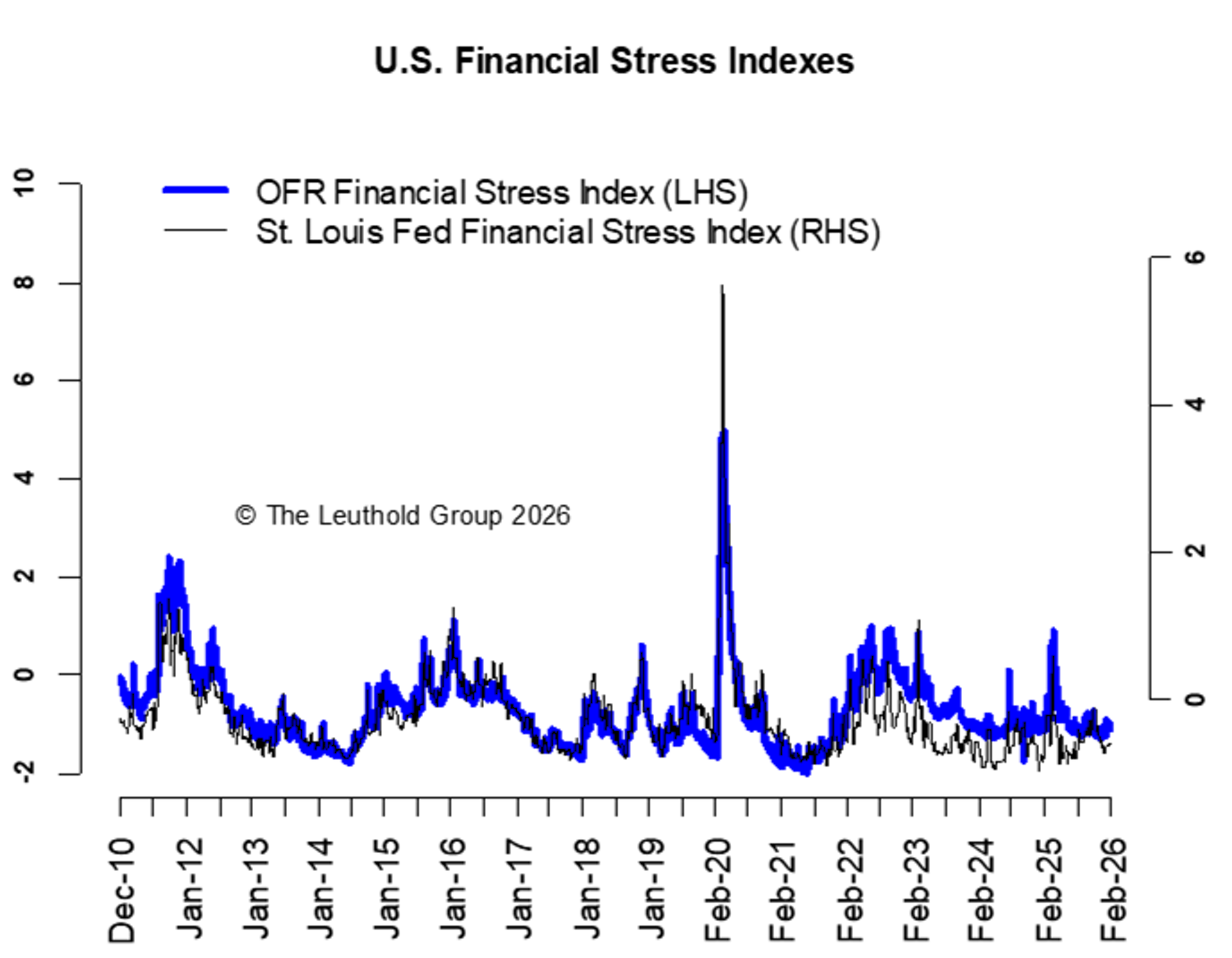
So far, however, contagion has been limited. Credit spreads have shown a muted response and the overall levels are still suggesting benign credit conditions. Financial stress is also largely absent, evidenced by the Office of Financial Research (OFR) and the St. Louis Fed indexes (Chart 11). Despite recent upticks, both are still indicating below-average stress.
Taken together, the three bears are not yet enough to negate the Goldilocks story outright, but they do imply that the balance of risk is shifting. What was once “just right” now warrants greater scrutiny and a renewed respect for downside. And we haven’t even accounted for the potential consequences from the ongoing conflict with Iran.

 Subscribe to Advisor Newsletter